
Bankable Project Report for Business Loans: Key Financial Ratios and Lender Expectations
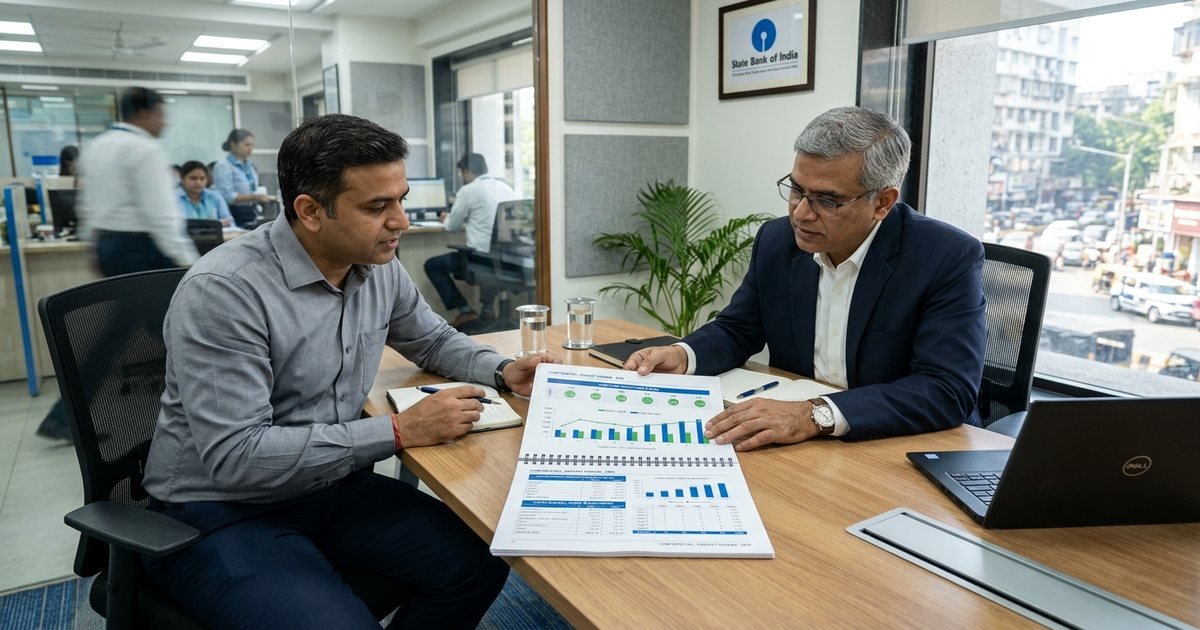
A bankable project report is an exhaustive technical, commercial, and financial feasibility document submitted to commercial banks and financial institutions to secure term loans, Cash Credit (CC), or overdraft limits. Beyond company background and market opportunity, lenders scrutinize Credit Monitoring Arrangement (CMA) data and core financial ratios: Debt Service Coverage Ratio (DSCR benchmark 1.5x - 2.0x), Current Ratio (minimum 1.33:1), Debt-to-Equity Ratio (typically under 2:1), and Break-Even Point. Reports failing to demonstrate cash debt service capability are routinely rejected.
Building a Bankable Project Report: What Credit Officers Actually Look For
Securing credit facilities—whether an MSME term loan, machinery financing under CGTMSE, or a Cash Credit (CC) limit—requires more than an impressive pitch deck. Commercial lenders evaluate applications through a rigorous credit appraisal lens governed by banking prudential norms, collateral assessment, and financial ratio thresholds.
A poorly formulated project report with unrealistic revenue growth, unsupported cost assumptions, or defective CMA (Credit Monitoring Arrangement) tables is the leading cause of loan rejections.
Review our corporate advisory solutions on Business Loans & Financial Modeling.
1. Key Components of a Comprehensive Bankable Project Report
A complete project report submitted to a commercial bank or financial institution should contain:
- Executive Summary & Promoter Profile: Background, net worth, technical qualifications, and track record of the promoters.
- Project Description & Cost of Project: Detailed capital expenditure budget (land, civil works, plant & machinery, electrification, pre-operative expenses, and margin money for working capital).
- Means of Finance: Clear breakdown of promoter contribution (equity/subordinated debt) vs proposed bank term loan (maintaining acceptable gearing ratios).
- Market Analysis & Commercial Viability: Target customer segments, competitive landscape, existing orders/contracts, and distribution channels.
- CMA Data Financial Projections (3 to 7 Years):
- Projected Statements of Profit and Loss;
- Projected Balance Sheets;
- Cash Flow and Funds Flow Statements;
- Working Capital Assessment (Turnover method or MPBF method).
2. Core Financial Ratios Scrutinized by Underwriters
Credit managers focus primarily on five vital solvency and liquidity ratios:
| Financial Ratio | Formula & Structure | Acceptable Banking Benchmark | Credit Interpretation |
|---|---|---|---|
| DSCR (Debt Service Coverage Ratio) | (PAT + Depreciation + Term Loan Interest) / (Principal Repayment + Interest) | 1.50x to 2.00x | Measures cash availability to comfortably repay loan principal and interest |
| Current Ratio | Current Assets / Current Liabilities | Minimum 1.33 : 1 | Ensures sufficient liquidity to settle short-term debts |
| Debt to Equity Ratio | Total Long Term Debt / Tangible Net Worth | Max 2.0 : 1 (up to 3:1 for infrastructure) | Measures promoter skin-in-the-game vs leverage |
| Interest Coverage Ratio | EBIT / Total Interest Expense | Above 2.50x | Evaluates operating safety buffer against interest obligations |
| Break-Even Point (BEP) | Fixed Costs / Contribution Margin | Below 50% - 60% of capacity | Ensures project achieves profitability at conservative operational levels |
3. The 4 Most Common Red Flags That Cause Loan Rejections
- Inverted or Negative Net Working Capital: Current liabilities exceeding current assets indicates that the business is using short-term operational funds to finance long-term assets.
- Excessive Unsubstantiated Growth Projections: Projecting 300% year-on-year revenue surges without proven order books or capacity expansions creates skepticism during bank risk committee reviews.
- Flawed DSCR Profiles: Projections showing a DSCR below 1.2 in early operational years signal an immediate need to restructure repayment moratoriums or increase equity contribution.
- Discrepancies Between ITR/GST and Bank Projections: Audited past financials submitted with the CMA report must match past GST returns (Form GSTR-9) and Income Tax returns (ITR-6) verbatim.
4. Professional Structuring Checklist
- Incorporate at least a 6 to 12-month moratorium on principal repayments for manufacturing projects during the construction/installation phase.
- Provide quotation pro-forma invoices from verified vendors for all proposed plant, machinery, and equipment.
- Conduct sensitivity analysis modeling the financial impact of a 10% decline in selling price or 10% rise in raw material costs.
For customized, bank-ready project reports and financial structuring, consult our Corporate Financial Advisory Team.
Frequently Asked Questions

Akash P R
Business Consultant10 Years+ Experience in Startup Consultancy, Direct Tax, Indirect Tax and Compliances • D BIZ CONSULTANCY
Business Consultant with 10 Years+ Experience in Startup Consultancy, Direct Tax, Indirect Tax and Compliances.
Connect with Akash on LinkedInOther Strategic Business Guides
GST Registration Documents in Kerala: How to Avoid Application Rejection
8 min readGST & TaxationGSTR-2B Reconciliation with Purchase Register: How to Match Invoices and Protect ITC
9 min readCompany Law & MCAAOC-4 vs MGT-7: Annual MCA Filing Requirements for Indian Companies Explained
8 min readLLP ComplianceLLP Form 8 and Form 11: Annual Compliance Checklist, Timelines and Late Fee Risks
7 min readLatest Regulatory Bulletins
Speak With Our Senior Business Consultants in Trivandrum & Kochi
D BIZ CONSULTANCY PVT. LTD. provides end-to-end company formation, ROC filings, GST accounting, trademark protection, and statutory compliance. Connect with us for personal advisory at our physical offices or 100% paperless digital onboarding.